
What factors should be taken into account?
In the interactive entertainment industry, the video game localization is much more than translating dialogue or adapting menus. It's a comprehensive process of cultural, linguistic, and technical transformation that allows a title to be enjoyed in different countries without losing its essence. When a video game arrives in the Spanish-speaking market, the experience it offers depends largely on the work done by the video game localizationteam. In other words, if the player feels that the story flows, that the humor works, and that the characters speak naturally, it's because there's a professional and meticulous process behind it.

Localization is essentially a blend of specialized translation, cultural adaptation, knowledge of the medium, and a deep understanding of player behavior. Therefore, professionals like myself, specializing in video games, applications, and software, play a fundamental role in ensuring that each title reaches the user with quality, clarity, and total immersion.
Transforming the gaming experience with video game localization
The video game localization begins with translation, but it doesn't end there. It involves adapting to space constraints, addressing technical issues, reviewing text within the game itself (linguistic QA), and even understanding cultural references that may not work in the target market. The goal is for the player to receive a product that feels made just for them.
This includes:
- adaptation of dialogues and scripts for dubbing;
- translation of menus, interfaces, achievements and tutorials;
- real-world review to ensure consistency and functionality;
- adjustment of the humor, cultural references, and manner of speaking of the characters; and
- consistent terminological choice, especially in RPGs, strategy games, or narrative titles.
In this sense, I combine my linguistic experience with a deep knowledge of UX, interactive storytelling and gamer culture, which allows me to create balanced, natural locations that are true to the original spirit.
Interactive storytelling: a unique challenge in video game localization
Video games have something that sets them apart from any other medium: interaction. The player doesn't just observe the story, but becomes part of it. Therefore, every translation decision directly affects how the game's universe is perceived.
In a narrative RPG, for example, the tone of the dialogue can define a character's personality; in a health or educational game, the clarity of the instructions determines the user experience; in a mobile app, brevity and precision influence functionality. In all cases, the focus is on respecting the developer's intention and offering content that flows naturally in Spanish.
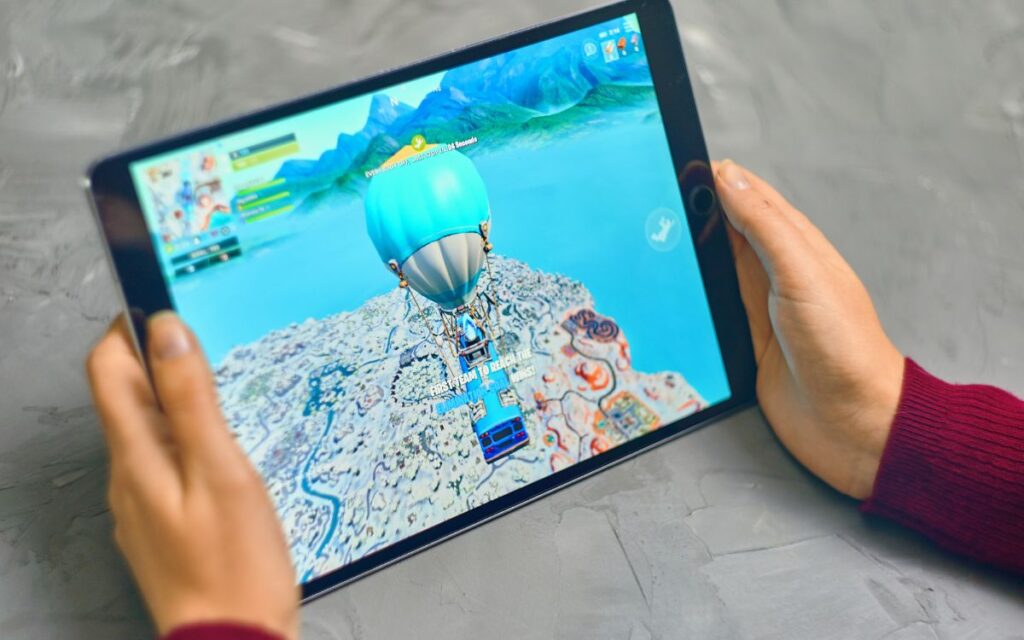
How do I approach my work as a translator and video game localization expert?
A video game can contain local references, holidays, inside jokes, idioms, and even regional expressions. Translating these elements into another language requires creativity and cultural sensitivity.
The video game localization demands:
- identify cultural elements that will not work in the target version;
- replace them with natural equivalents in Spanish;
- maintain a balance between authenticity and accessibility, and
- avoid literal translations that break immersion.
A good example is humor, since a joke that works in English may fall flat in Spanish if it isn't adapted properly. This is where the experience of the person in charge of the video game localization comes into play. video game localization, which must be able to create fluid cultural equivalents without losing the original intention.

What is linguistic QA?
A video game localization is only complete when it's reviewed within the game itself. This step allows us to detect contextual errors, cut lines, misaligned text, or narrative inconsistencies. Linguistic QA ensures a seamless and interference-free player experience. Therefore, I provide this service as part of my job, ensuring that every line is read correctly on screen and that the final experience is optimal.
 English (UK)
  Español
  Français